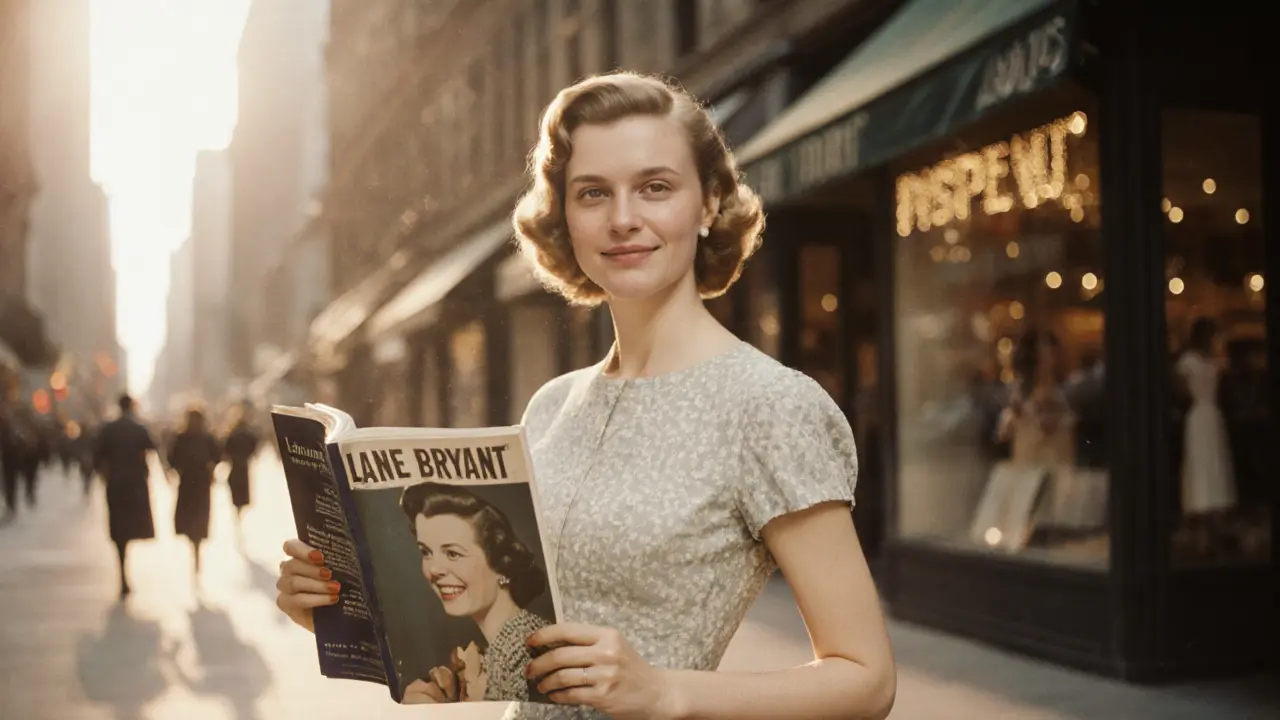
You’ve seen curvy models on runways, in magazines, and on social media. But have you ever wondered who broke the mold-literally-when it came to representing fuller figures in fashion? The answer isn’t as simple as one name, but one woman changed everything: Connie Fleming.
Who Was the First Plus-Size Model?
While many assume it was Wilhelmina Cooper or someone from the 1990s, the true pioneer was Connie Fleming, a model from New York who began working professionally in the late 1950s. She wasn’t just a model who happened to be larger-she was hired specifically because of her size, at a time when the fashion industry only celebrated ultra-slim silhouettes. In 1958, she signed with the John Robert Powers agency and became the first woman to be officially labeled and marketed as a “plus-size” model.
Before Fleming, fuller-figured women were either airbrushed out of ads or cast only in roles for “maternity” or “household products.” Fleming changed that. She modeled for brands like Lane Bryant and J.C. Penney, appearing in catalogs and print ads that celebrated real bodies. Her face was on billboards, and her presence forced retailers to rethink who their customers were.
Why This Matters
Fashion doesn’t just reflect culture-it shapes it. In the 1950s and 60s, the ideal woman was thin, boyish, and often unattainable. But millions of women didn’t fit that mold. They were shopping, paying for clothes, and getting ignored. Connie Fleming didn’t just walk a runway; she made the industry admit that beauty comes in more than one size.
Her work paved the way for every plus-size model who followed: Ashley Graham, Tess Holliday, and even the first plus-size Victoria’s Secret Angel, Ashley Graham, who didn’t appear until 2016-nearly 60 years later. That delay tells you how slow change can be, even when the proof is right in front of you.
What “Plus-Size” Actually Meant Back Then
Today, “plus-size” often means size 12 and up. But in the 1950s, the definition was different. Back then, a size 14 was considered large. Connie Fleming wore a size 12-14, which was well above average at the time. The average American woman’s dress size in 1960 was around 12, meaning Fleming was already bigger than most women-but still labeled “plus.”
That’s the irony: she was modeling for women who were just like her, yet the industry still treated her as an exception. Her success proved that there was a market-and a demand-for inclusive fashion long before anyone wanted to admit it.
Other Early Pioneers
Connie Fleming wasn’t alone. Around the same time, another model, Wilhelmina Cooper (yes, the same Wilhelmina who later founded the Wilhelmina Models agency), also worked with fuller-figured clients and advocated for body diversity. But unlike Fleming, Cooper didn’t model as a plus-size woman herself-she used her influence behind the scenes to push for change.
Then there was Georgia May Jobson, who started modeling in the 1960s for British catalogs. She was one of the first European plus-size models, appearing in ads for department stores like Selfridges. And in the 1970s, Cheryl Tiegs, though not plus-size by today’s standards, challenged norms by promoting fitness and natural beauty over extreme thinness.
But none of them were hired as a “plus-size model” before Connie Fleming. She was the first to be given that title-and the first to be paid for it.
How the Industry Responded
Not everyone celebrated her. Many designers refused to dress her. Some magazines rejected her photos outright. Retailers feared that showing a curvy woman would make their customers feel worse about themselves. But the opposite happened. Sales for Lane Bryant and other brands that featured Fleming went up. Women wrote letters saying, “I finally see myself in fashion.”
By the 1970s, a handful of other models followed-like Pat Cleveland, who was Black and curvy, and Roberta Flack, who modeled for African American publications. But the mainstream industry still held tight to its narrow ideal. It wasn’t until the 2000s, with the rise of blogs and social media, that plus-size modeling began to gain real momentum.
Why Connie Fleming Isn’t a Household Name
Here’s the uncomfortable truth: history forgets the pioneers who broke ground before the world was ready to celebrate them. Fleming never became a celebrity. She didn’t appear on talk shows. She didn’t launch her own line. She just showed up, worked hard, and kept doing it-even when no one was watching.
She passed away in 2003, long before the body positivity movement went viral. No documentaries were made about her. No museums displayed her photos. But if you look closely at the first ads for Lane Bryant from the late 50s, you’ll find her smiling back at you-not as a token, but as a woman who belonged.
What Changed After Her
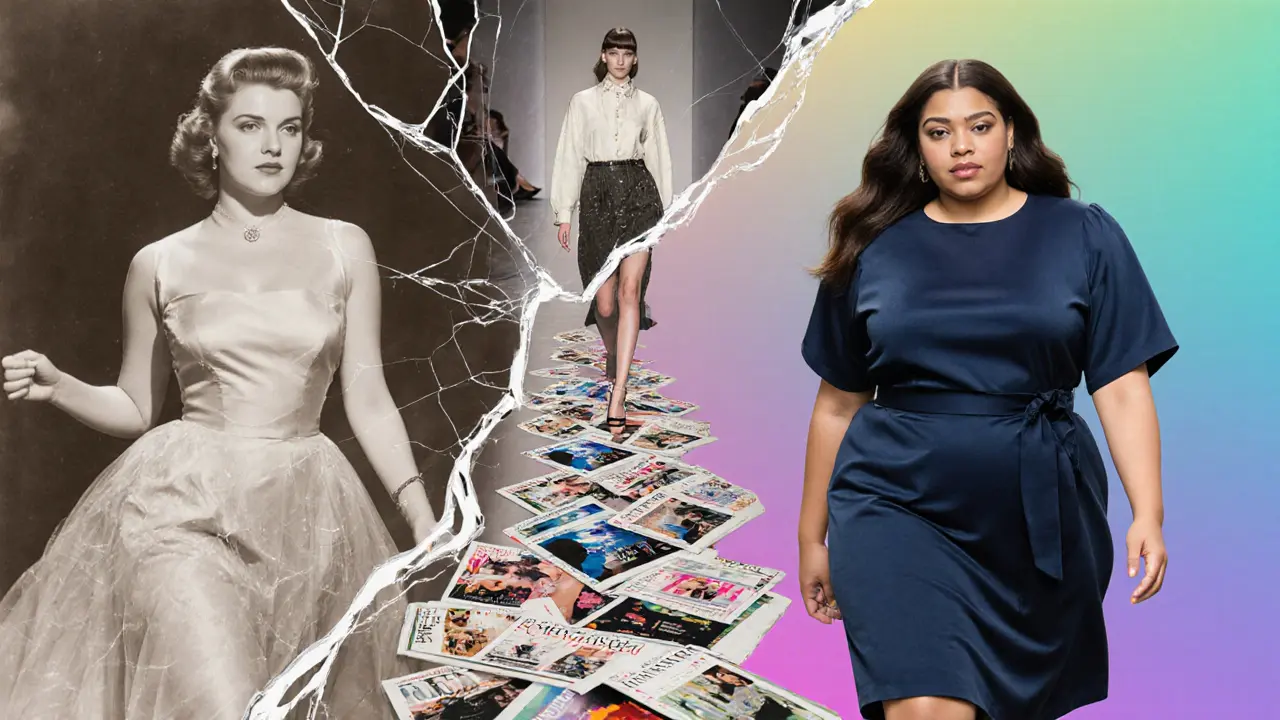
Today, plus-size models are on major runways. Brands like Savage X Fenty, Aerie, and Universal Standard hire models of all sizes. Retailers offer extended sizing. And young girls growing up now see themselves reflected in ads-not as a “curvy alternative,” but as the norm.
That shift didn’t happen overnight. It happened because Connie Fleming and others like her refused to wait for permission. They walked into studios, held their heads high, and said, “I’m here. And I’m not going away.”
How to Learn More About Her Legacy
If you want to see her work, the New York Public Library’s Fashion Photography Collection holds original prints from her 1958 Lane Bryant campaign. The Metropolitan Museum of Art’s Costume Institute also features a small exhibit on body diversity in fashion, where her name is listed among early trailblazers.
There’s no Wikipedia page for her. No Wikipedia page. But if you dig into old catalogs, magazine archives, or academic papers on fashion history, you’ll find her name-and the quiet revolution she started.
Final Thought
She didn’t set out to change the world. She just wanted to get paid for her work. But sometimes, the quietest acts are the ones that shift entire industries. Connie Fleming didn’t need a viral moment. She didn’t need a hashtag. She just needed to be seen. And once she was, nothing was the same.
FAQ: Your Questions About the First Plus-Size Model Answered
Was Connie Fleming the first plus-size model in the world?
Yes, Connie Fleming is widely recognized by fashion historians as the first woman to be officially hired and marketed as a plus-size model. She signed with the John Robert Powers agency in 1958 and appeared in national catalogs for brands like Lane Bryant, making her the first to be labeled and paid specifically as a plus-size model in the modern fashion industry.
What size was Connie Fleming?
Connie Fleming wore a size 12-14 in the late 1950s, which was considered large at the time. The average American woman’s dress size in 1960 was around 12, meaning she was already larger than most women but still classified as “plus-size” by the industry’s narrow standards.
Why isn’t she more well-known today?
Because the fashion industry didn’t celebrate her during her career, and mainstream media didn’t document her legacy. Unlike modern models who have social media and TV exposure, Fleming worked quietly in catalogs and print ads. She never became a celebrity, and her contributions were overlooked until historians began digging into fashion archives decades later.
Did she inspire today’s plus-size models?
Absolutely. Models like Ashley Graham, Tess Holliday, and Lizzo have all cited the importance of visibility and representation-values that Fleming fought for decades before them. She proved that curvy women could be desirable, professional, and marketable, laying the foundation for today’s inclusive fashion movement.
Were there any plus-size models before her?
Women with fuller figures appeared in ads before Fleming-usually as “maternity” or “household” models-but none were officially hired, labeled, or promoted as “plus-size models” in the same way. Fleming was the first to be given that specific title and paid for it in mainstream fashion advertising.
Next Steps: How to Honor Her Legacy
Want to do more than just know her name? Start by supporting brands that hire diverse models. Follow accounts that celebrate real bodies, not just filtered ones. Buy from companies that offer extended sizing-not because it’s trendy, but because it’s right.
And next time you see a curvy model on a billboard, remember: someone had to walk that path first. Her name was Connie Fleming. And she didn’t wait for the world to catch up. She just showed up-and changed it.