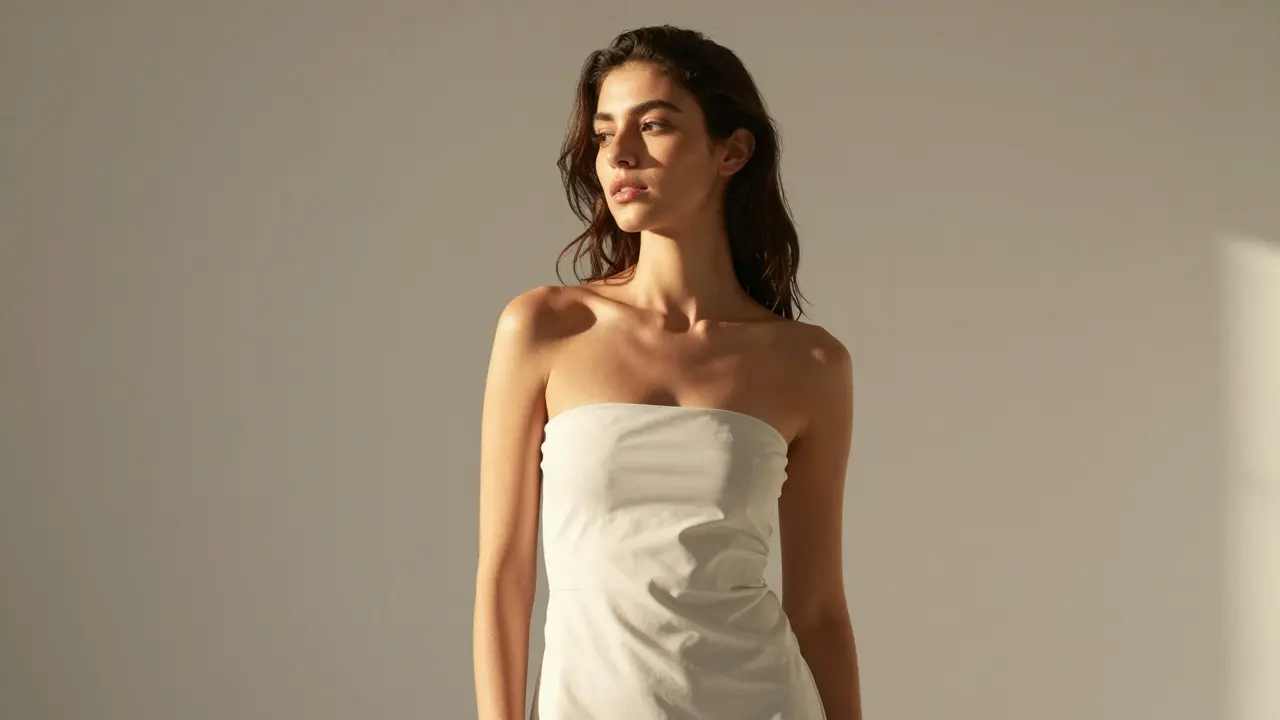
You’ve seen them-models who look stunning in every photo, no matter the lighting, angle, or outfit. Their faces seem carved by magic, their bodies move like water, and even a simple glance turns into a million-dollar shot. But here’s the truth: photogenic isn’t something you’re born with. It’s a skill. And if you’re trying to build a model portfolio that actually works, knowing what makes someone photogenic is the first step to getting hired.
What Really Makes a Model Photogenic?
It’s not just about having perfect skin or high cheekbones. Those help, sure-but they’re not the dealbreaker. What actually makes a model photogenic is how they use their face, body, and energy in front of the camera. Think of it like acting. You’re not just standing there-you’re telling a story without saying a word.
Photogenic models know how to control their expressions. They don’t smile too wide or stare too hard. They let their eyes do the talking. A slight tilt of the head, a soft parting of the lips, a shoulder rolled back-these tiny adjustments turn an ordinary pose into something unforgettable.
And it’s not just about looks. It’s about presence. The best models don’t fight the camera-they collaborate with it. They understand how light hits their jawline, how fabric drapes over their hips, and how a shadow can add drama instead of hiding flaws.
Key Points: What Makes a Model Photogenic
- Controlled facial expressions beat forced smiles every time
- Body awareness-knowing where your limbs are in space-is more important than your height
- Eye contact with the lens creates connection, not just looks
- Stillness is powerful. Movement must be intentional, not fidgety
- Confidence isn’t loud-it’s quiet, steady, and unshakable
The Science Behind the Shot
There’s real psychology here. Studies in visual perception show that viewers respond strongest to faces that are slightly asymmetrical-not perfectly symmetrical. Why? Because perfect symmetry looks artificial. A model who tilts their chin just 3 degrees, or lets one eyebrow lift a fraction, looks more human. More real. More memorable.
Photographers don’t just shoot models-they shoot emotion. A model who can shift from cool detachment to warm vulnerability in two seconds has a massive advantage. That’s why runway models often look blank in photos-they’re trained to be blank slates. But commercial and editorial models? They need range. They need to look like they’ve lived something.
And posture? It’s everything. Slouching doesn’t just make you look tired-it distorts your proportions. A model who stands tall with shoulders back and ribs lifted doesn’t just look taller-they look more powerful. More in control. More photogenic.
Why This Matters for Your Model Portfolio
If you’re building a portfolio, you’re not just collecting photos. You’re building a resume. Agencies don’t hire based on how you look in one shot. They hire based on how consistent you are across ten, twenty, fifty shots.
Let’s say you have a photo where you look amazing-glowing skin, perfect lighting, the dress flows just right. Great. But if the next shot has you squinting, one shoulder higher than the other, or your hand awkwardly clutching your hip? That’s a red flag. Agencies see that as inconsistency. They see it as unprofessional.
Photogenic models don’t rely on luck. They practice. They watch their own videos. They record themselves posing and then watch it back. They ask: Does this look natural? Does this look like me? Or does it look like I’m trying too hard?
Types of Photogenic Models in Dubai
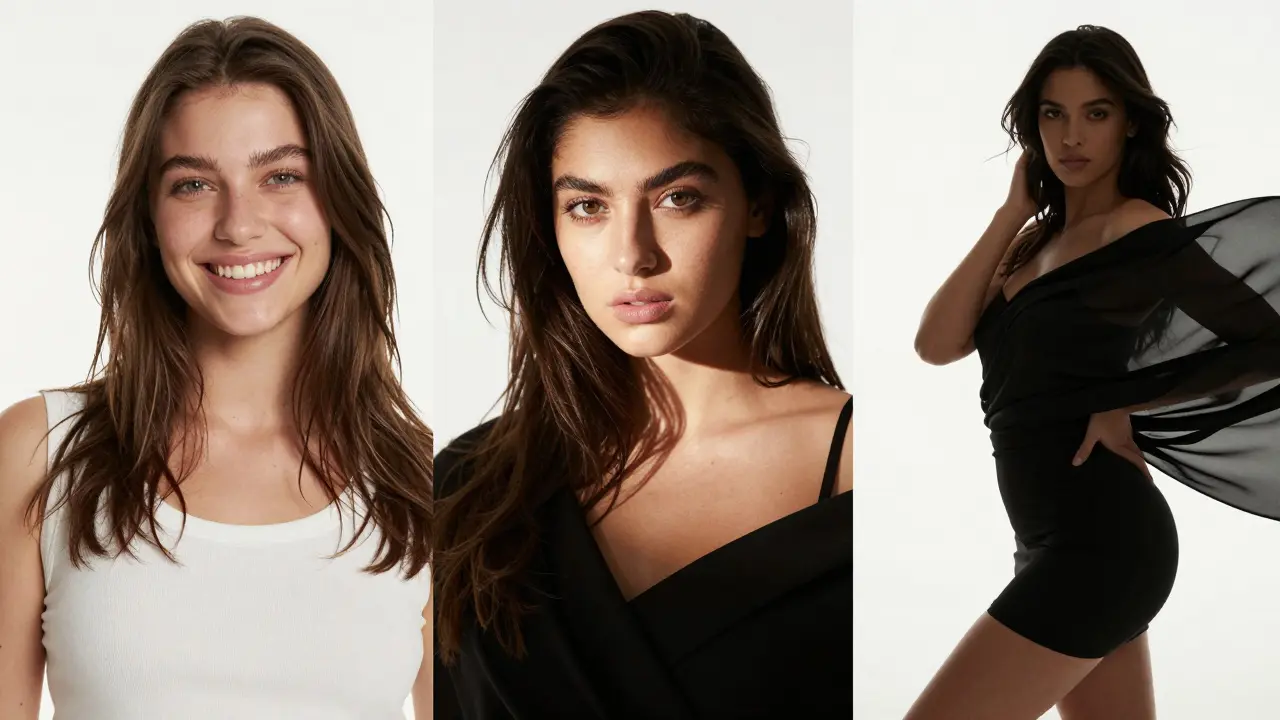
Dubai’s modeling scene is diverse-and that means different kinds of photogenic models are in demand.
- Commercial models need to look approachable. Think skincare ads, luxury watches, or high-end apartments. Their smiles are warm, their eyes are open, their energy is inviting.
- Editorial models go for drama. Think Vogue or Harper’s Bazaar shoots. They’re often taller, leaner, and more expressive. Their photogenic quality comes from their ability to embody a mood-mysterious, fierce, ethereal.
- Plus-size models are breaking ground here. Their photogenic edge? Confidence that doesn’t apologize. They own the frame. Their skin texture, curves, and natural movement become the focus-not something to hide.
- Male models aren’t just about abs. The most photogenic men know how to use their gaze. A slow blink, a hand in a pocket, a slight smirk-they don’t need to flex to be powerful.
What’s common across all types? They all move with intention. They don’t just stand there. They inhabit the space.
How to Train Yourself to Be Photogenic
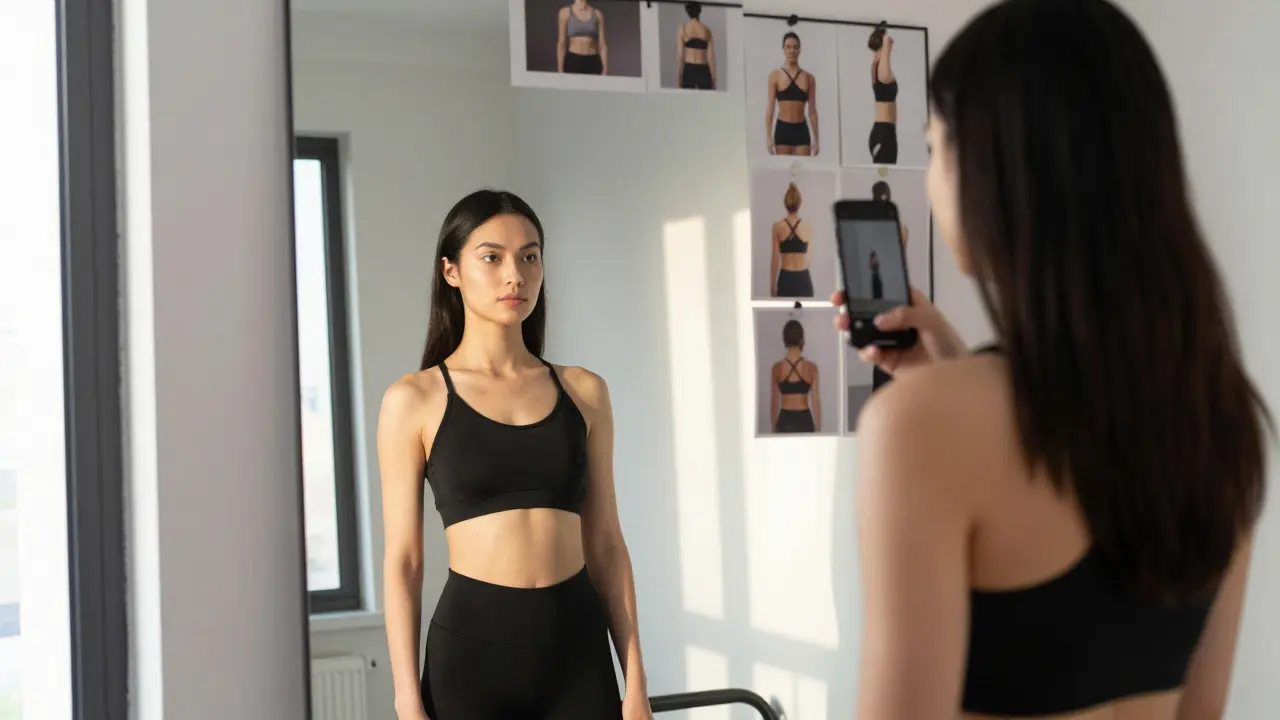
You don’t need a million-dollar agency to start. You just need a mirror, a phone, and patience.
- Stand in front of a mirror. Turn slowly. Notice how your body looks from every angle. Where do your shoulders sit? Where do your hips tilt? Where does your neck connect to your shoulders?
- Record yourself talking. Watch how your face moves when you’re relaxed. Then, try to replicate that same relaxed expression in a still pose.
- Practice five expressions: neutral, subtle smile, intense gaze, playful, and contemplative. Do each one for 10 seconds. Don’t blink unless you need to.
- Take photos of yourself every day. Not selfies. Posed shots. Use natural light. No filters. Look at the results. Which ones feel real? Which ones feel staged?
- Watch fashion films-Chanel, Dior, Prada. Notice how the models move. Notice how they hold still. Notice how they breathe.
This isn’t about becoming someone else. It’s about becoming the most polished version of yourself.
What to Expect in a Photoshoot
When you walk into a studio in Dubai-whether it’s in Jumeirah or Downtown-you’re not just a body. You’re a collaborator.
The photographer might not say much at first. They’ll watch you. They’ll ask you to turn. To tilt. To breathe. They’ll tell you to relax your jaw. To lift your chest. To let your fingers drape naturally. Don’t take it personally. They’re not criticizing you-they’re guiding you.
Good photographers will give you cues: “Imagine you’re smelling a rose.” “Think of your spine as a string pulling you up.” “Don’t smile. Just soften.” These aren’t random. They’re tools to unlock your photogenic potential.
And yes-sometimes you’ll feel awkward. You’ll look at the monitor and think, That’s me? That’s normal. The best models feel that way too. The difference? They keep going. They trust the process.
Photogenic vs. Beautiful: The Difference That Matters
Beauty is subjective. Photogenic? That’s technical. You can be beautiful and not photogenic. You can be average-looking and totally photogenic.
Think of it like this: A painting can be beautiful, but if the brushstrokes are messy, it won’t translate well in a photo. A model who’s photogenic has control over their form. They know how to become a living sculpture.
One of the most photogenic models I’ve worked with had a crooked smile. Her nose was slightly off-center. Her left eyebrow sat higher than her right. But when she looked into the lens, she looked like she was holding a secret. That’s photogenic. Not perfect. But unforgettable.
Common Mistakes That Kill Photogenic Potential
- Smiling with your mouth only-your eyes stay dead
- Staring too hard at the camera-it looks like you’re begging for approval
- Letting your hands hang limp-they look like dead fish
- Tensing your shoulders-it makes your neck disappear
- Trying to copy someone else’s look-it never reads as authentic
The biggest mistake? Thinking you need to be flawless. You don’t. You need to be real.
FAQ: Your Questions About Being Photogenic Answered
Can someone who isn’t traditionally beautiful be photogenic?
Absolutely. Many of the most successful models don’t fit classic beauty standards. What matters is how they carry themselves-how they use their features to create mood and emotion. A unique jawline, a distinctive gaze, even a scar can become part of your signature look. The camera loves character, not perfection.
Do I need to be tall to be photogenic?
No. Height helps in runway modeling, but for commercial, editorial, and social media work, photogenic quality is about presence, not inches. Many top models in Dubai are 5’6” or even shorter. What they have is control-over their posture, their expressions, their energy. That’s what gets booked.
How long does it take to become photogenic?
It varies. Some people get it in weeks with daily practice. Others take months. The key isn’t time-it’s consistency. Practice posing in front of a mirror every day for 10 minutes. Record yourself. Watch it back. Adjust. Repeat. After 30 days, you’ll notice a difference. After 90, you’ll see a transformation.
Can makeup or lighting make me more photogenic?
They can enhance, but they can’t create. Good lighting and makeup will polish your look, but if you’re stiff, tense, or unsure in front of the camera, no filter will save it. The best photos come from someone who feels comfortable in their own skin-makeup and light just highlight what’s already there.
Is being photogenic the same as being a good model?
Not exactly. Being photogenic means you look great in photos. Being a good model means you’re professional, reliable, adaptable, and easy to work with. Many photographers will choose a model who’s slightly less photogenic but easier to direct over someone who’s stunning but uncooperative. Skill matters as much as looks.
Final Thought: It’s Not About the Camera-It’s About You
The most photogenic people aren’t the ones who try the hardest. They’re the ones who stop trying. They stop worrying about whether they’re good enough. They stop comparing themselves to others. They just show up-quiet, present, and real.
If you want to build a model portfolio that gets noticed, stop chasing perfection. Start chasing presence. Practice not to look like someone else, but to become more of yourself. That’s the kind of authenticity that catches a photographer’s eye. That’s the kind of energy that lands you jobs.
You don’t need to be flawless. You just need to be you-polished, practiced, and perfectly in command of your own image.