
You think Dubai is all about luxury yachts, golden skylines, and endless shopping malls. And yeah, it is. But if you’re thinking of moving here-really moving, not just vacationing-you need to know the other side. The part no Instagram post shows. The part that sneaks up on you after the first month, when the novelty wears off and you’re stuck in traffic on Sheikh Zayed Road at 10 p.m. with no one to talk to. I’ve lived here for over six years. I’ve seen friends leave. I’ve felt it myself. This isn’t a travel guide. This is the real talk.
It’s expensive-like, really expensive
You hear "tax-free income" and think you’re golden. But here’s the catch: everything else costs more than back home. Groceries? A cart of basic stuff from Carrefour can set you back $150. A simple dinner for two at a decent restaurant? $80 minimum. Rent? Forget finding a decent one-bedroom under $2,500 a month in a decent neighborhood. And don’t even think about utilities. Air conditioning isn’t optional here-it’s survival. Your electricity bill in summer? Easily $400. Water? Not cheap either. And don’t get me started on car insurance. It’s not just high-it’s unpredictable. One minor fender bender, and you’re paying $2,000 out of pocket.
There’s no safety net. No free healthcare. No public education system worth mentioning. If you have kids, you’re looking at $15,000 to $30,000 a year for decent schooling. And if you get sick? You better have insurance. Or a very deep bank account.
You’re not really part of the community
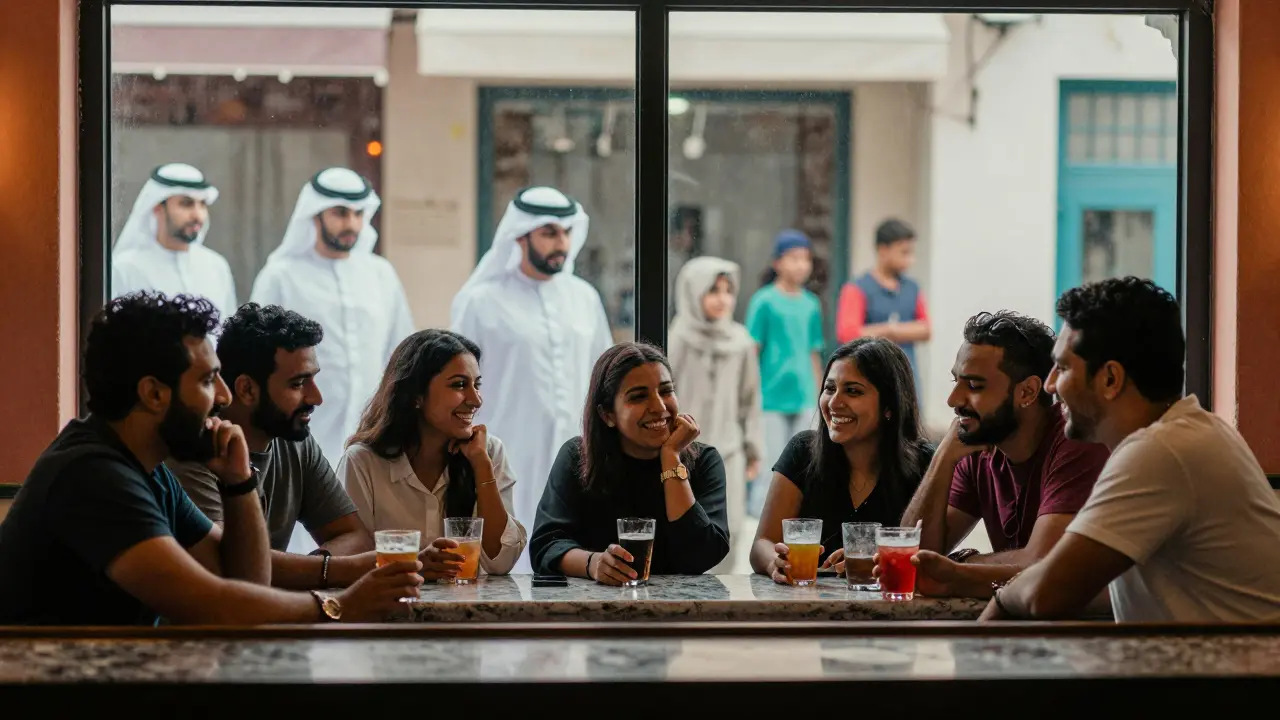
Dubai has over 200 nationalities living here. Sounds diverse, right? But here’s the truth: most of you are just passing through. You work, you sleep, you go to the mall. You don’t know your neighbors. You don’t go to local events. You don’t speak Arabic. And honestly? Most Emiratis don’t care if you do. The social fabric here is thin. You’re not welcomed into local life-you’re tolerated as a worker, a consumer, a temporary resident.
Try to make friends outside your expat bubble? Good luck. Most locals have tight-knit family circles that don’t open easily. And if you’re not in the right industry, you’re not even on their radar. You’ll end up hanging out with other expats from your country. And that gets old fast.
The work culture is brutal
"No taxes" sounds great until you realize your boss expects you to work 12-hour days, six days a week. Weekends? Friday and Saturday. That’s it. And don’t expect work-life balance. If you leave at 6 p.m., you’re the weirdo. If you say no to overtime? You’re labeled "not team player."
And the pressure? It’s constant. Everyone’s chasing promotions, bonuses, bigger apartments. There’s no "chill" culture here. No "let’s take it slow." If you’re not climbing, you’re falling behind. I’ve seen people burn out in under a year. They didn’t quit their job. They quit Dubai.
There’s no real freedom
You think you’re free because you can drink alcohol, wear shorts, and dance at a club. But you’re not. Not really. The rules are everywhere-just hidden. You can’t kiss in public. You can’t take photos of government buildings. You can’t criticize the royal family-even in private. You can’t post anything online that might be seen as "offensive."
One friend got deported after a drunken argument at a bar. He didn’t hit anyone. He didn’t break anything. He just said something about the government. That’s it. No trial. No warning. Just a one-way ticket out.
And don’t forget the visa system. Your entire life here depends on your employer. Lose your job? You have 30 days to find another one or leave. No grace period. No unemployment benefits. No safety net. You’re not a resident. You’re a temporary guest with an expiration date.
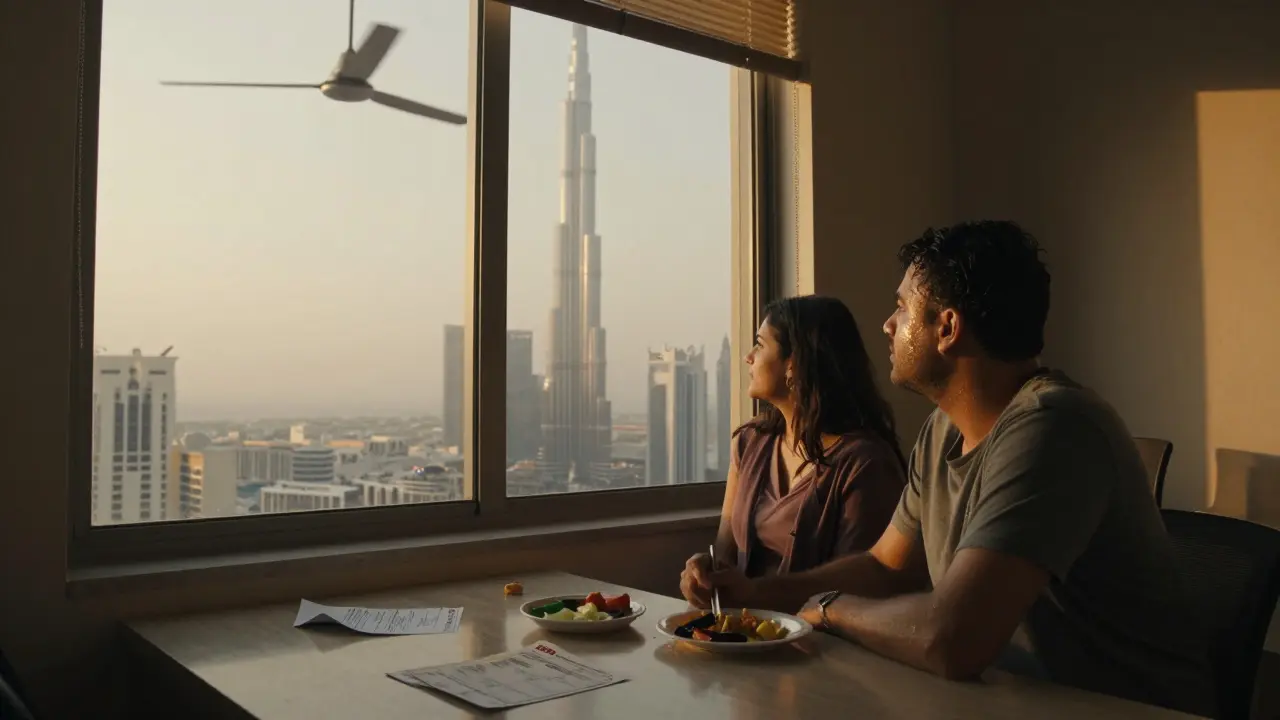
The heat is not just uncomfortable-it’s dangerous
Summer here isn’t hot. It’s hostile. From May to September, temperatures hit 45°C (113°F) with humidity that feels like breathing soup. If you’re not inside an air-conditioned building, you’re risking heatstroke. Even walking to your car can be dangerous.
And there’s no escape. The desert is just outside the city. The beach? Too hot to swim unless you go at dawn. The mountains? Too far. You’re trapped in a concrete box with AC units running nonstop. And when the power goes out? That’s when you realize how dependent you are on machines just to survive.
You’re surrounded by luxury-but you don’t own any of it
Dubai is built to impress. Burj Khalifa. Palm Jumeirah. The Dubai Mall. It’s all stunning. But here’s the irony: you don’t live in any of it. You live in a 700-square-foot apartment in Jumeirah Lakes Towers. You drive a 5-year-old Toyota because you can’t afford a new BMW. You eat at the food court because you can’t afford the rooftop restaurant.
You’re surrounded by wealth, but you’re not part of it. You’re a spectator. And that’s lonely.
There’s no real seasons
Back home, you had spring, fall, snow, leaves changing. Here? It’s either burning hot or slightly less burning hot. No rhythm. No change. No natural cues. Time just blurs. You lose track of months. Holidays feel forced. Christmas? Just another sales event. Eid? You’re not invited. You’re just… there.
It’s emotionally draining. You start missing things you didn’t even know you loved-like rain, or cold mornings, or the smell of earth after a storm.
What’s the upside? It’s real-but it’s not enough
Yes, you earn more. Yes, the infrastructure is flawless. Yes, it’s safe. Yes, the food is amazing. Yes, you can fly anywhere in the world in 6 hours.
But here’s the question: at what cost?
If you’re young, single, and chasing a quick paycheck? Dubai can work. It’s a sprint, not a marathon. But if you’re looking for community, stability, freedom, or a life that feels like yours? You’ll leave.
I’ve met too many people who came here for the money-and stayed because they didn’t know how to leave. They’re stuck. Not because they can’t afford to go. But because they don’t know where else to go.
Who should avoid living in Dubai?
- You want deep friendships and long-term connections
- You need a predictable, calm work environment
- You value personal freedom over convenience
- You have kids and want public education or affordable healthcare
- You’re sensitive to extreme heat or isolation
- You plan to stay longer than 3-5 years
Who might still thrive here?
- You’re in finance, tech, or oil-high-paying, short-term roles
- You’re single and want to save aggressively
- You’re an entrepreneur with a global business
- You don’t mind being a temporary resident
- You love fast-paced, high-stakes environments
Frequently Asked Questions
Is Dubai safe to live in?
Yes, Dubai is one of the safest cities in the world for crime. Violent crime is extremely rare. But "safe" doesn’t mean "free." The legal system is strict, and cultural rules are enforced harshly. A simple mistake-like holding hands in public or posting a sarcastic comment online-can lead to fines, detention, or deportation. Safety here is conditional.
Can you become a citizen of Dubai?
Almost impossible. UAE citizenship is rarely granted to foreigners. Even after decades of living and working here, you won’t qualify unless you’re married to an Emirati, have made extraordinary contributions to the country, or are a rare exception. Most expats live under temporary visas tied to their jobs. There’s no path to permanent residency.
Is it true you can’t drink alcohol in Dubai?
You can drink-but only in licensed venues: hotels, bars, and private clubs. You need a liquor license to buy alcohol from a store, and it’s expensive. Drinking in public, driving under the influence, or being visibly intoxicated anywhere outside a licensed space can get you arrested. Even if you’re not drunk, if you’re acting "disruptive," you’re at risk.
What’s the biggest surprise for new expats?
The silence. Not the noise of traffic or construction. The emotional silence. You’ll realize no one here really knows you. You’re not part of the culture. You’re not part of the community. You’re just a paycheck with a passport. That loneliness hits harder than the heat.
Is Dubai a good place to raise kids?
It depends. The schools are excellent-IF you can afford them. But the social environment is isolating. Kids grow up in expat bubbles with little exposure to local culture. There’s no playground culture, no neighborhood friends, no free public spaces for unstructured play. And the pressure to perform academically starts early. Many families leave when their kids turn 12.
So-is Dubai worth it? Maybe. But only if you go in with your eyes wide open. Not for the skyline. Not for the tax-free pay. For the right reasons. Or you’ll end up like so many others: rich, tired, and wondering where your life went.