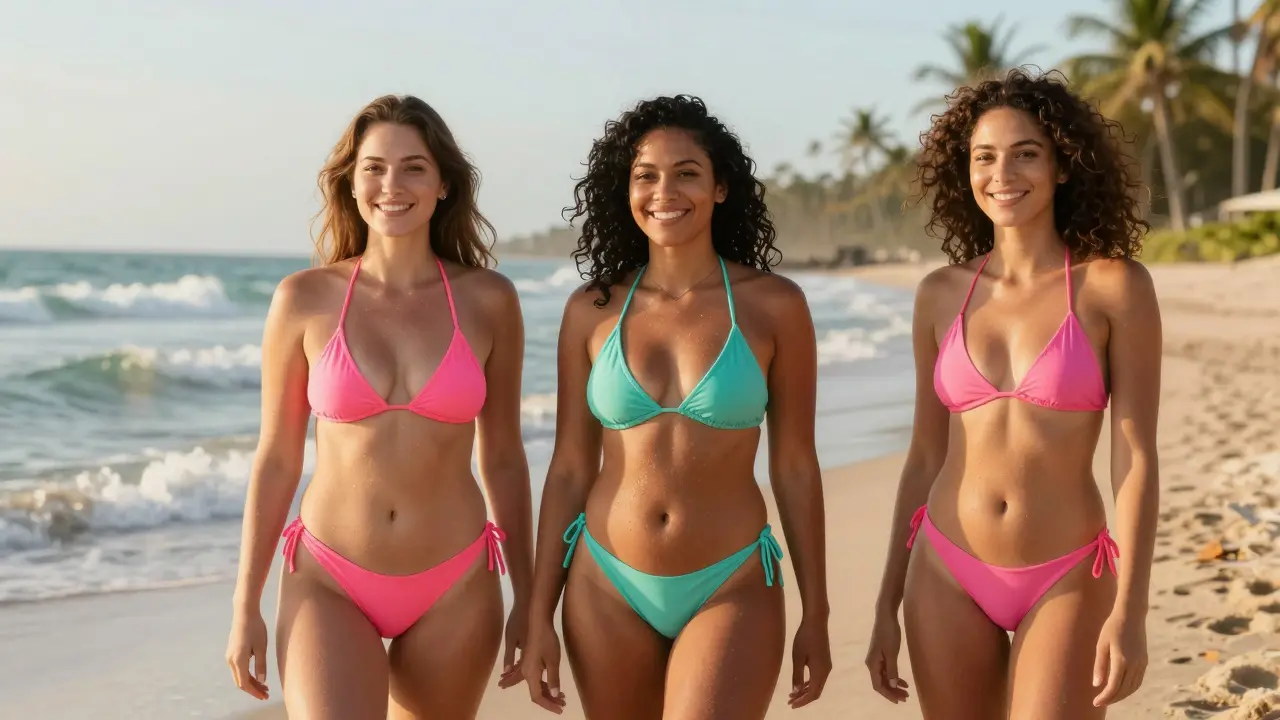
You’ve scrolled through Instagram. Seen the flawless photos. The tan skin, the tight swimsuits, the impossible curves. And you’ve asked yourself: What BMI looks best in a bikini? The truth? There’s no single answer that fits everyone. But there’s a lot of misinformation out there-and it’s costing people their confidence, their health, and their peace of mind.
Here’s the quick answer
There’s no universal "best" BMI for a bikini. Models in magazines often have BMIs between 17 and 19, but that’s not healthy for most people. A BMI between 18.5 and 24.9 is considered normal weight by the World Health Organization-and that’s where most real, healthy, confident bikini bodies fall. What matters more than the number? Muscle tone, body composition, and how you feel in your skin.
Key takeaways
- There’s no "perfect" BMI for a bikini-health and confidence matter more than numbers.
- Most bikini models have BMIs between 17 and 19, but many are underweight by medical standards.
- A BMI of 18.5-24.9 is the healthy range for most adults, regardless of clothing.
- Body fat percentage and muscle mass matter more than BMI alone.
- Photoshopping, lighting, and angles make most "ideal" bikini bodies look unrealistic.
What BMI really means-and why it’s misunderstood
BMI stands for Body Mass Index. It’s a simple formula: weight in kilograms divided by height in meters squared. It was never meant to measure fitness, beauty, or health. It was created in the 1830s by a Belgian mathematician to study population trends-not to tell you if your swimsuit looks good.
Here’s the problem: BMI doesn’t distinguish between muscle and fat. A fit athlete with low body fat and high muscle mass can have the same BMI as someone with excess fat. That’s why two people with the same BMI can look completely different-one toned and strong, the other soft and frail.
And in the modeling world? Many bikini models are pushed to extremes. A 5’9" woman weighing 125 pounds has a BMI of 18.5-right at the lower edge of "normal." But if she’s 120 pounds? That’s a BMI of 17.7. That’s not "perfect." That’s dangerously low. The American College of Sports Medicine says women need at least 17% body fat to maintain regular menstrual cycles. Below that, you risk bone loss, hormonal crashes, and long-term health damage.
Why "bikini bodies" in ads aren’t real
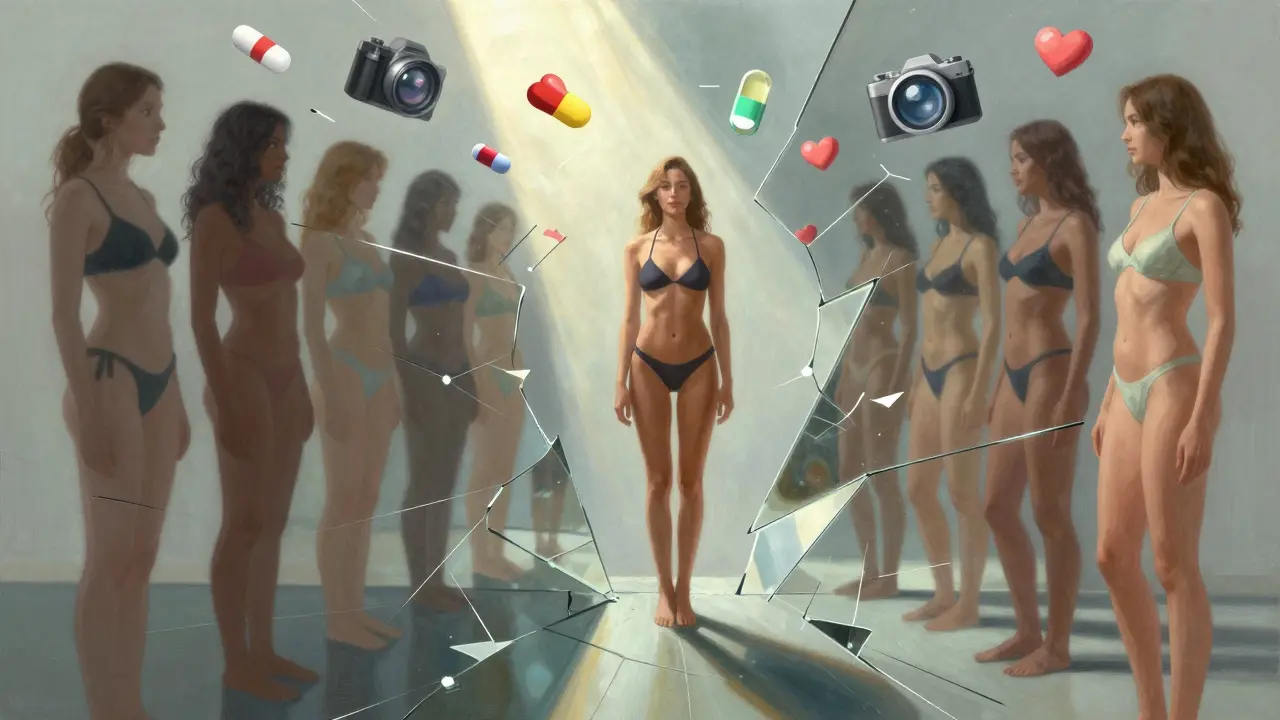
Think you’re comparing yourself to someone real? You’re not. Most bikini photos you see online have been edited. Lighting is adjusted to create shadows that make hips look narrower. Filters smooth skin and shrink waistlines. Cameras are angled to make legs look longer and torsos shorter.
Back in 2018, a study published in the Journal of Eating Disorders found that 89% of bikini photos on Instagram were digitally altered. That means less than 1 in 10 actually showed a natural body. And yet, people spend hours trying to look like them.
Real bikini bodies come in all shapes. Some are curvy. Some are lean. Some have stretch marks. Some have belly rolls. And guess what? They all look great when they’re healthy and confident.
What actually makes a bikini look good on you
It’s not your BMI. It’s your posture. Your confidence. Your skin tone. Your movement.
Think about it: a woman with a BMI of 22 who walks with her shoulders back, smiles naturally, and moves with ease will look more attractive than someone with a BMI of 17 who’s hunched over, tense, and avoiding the camera.
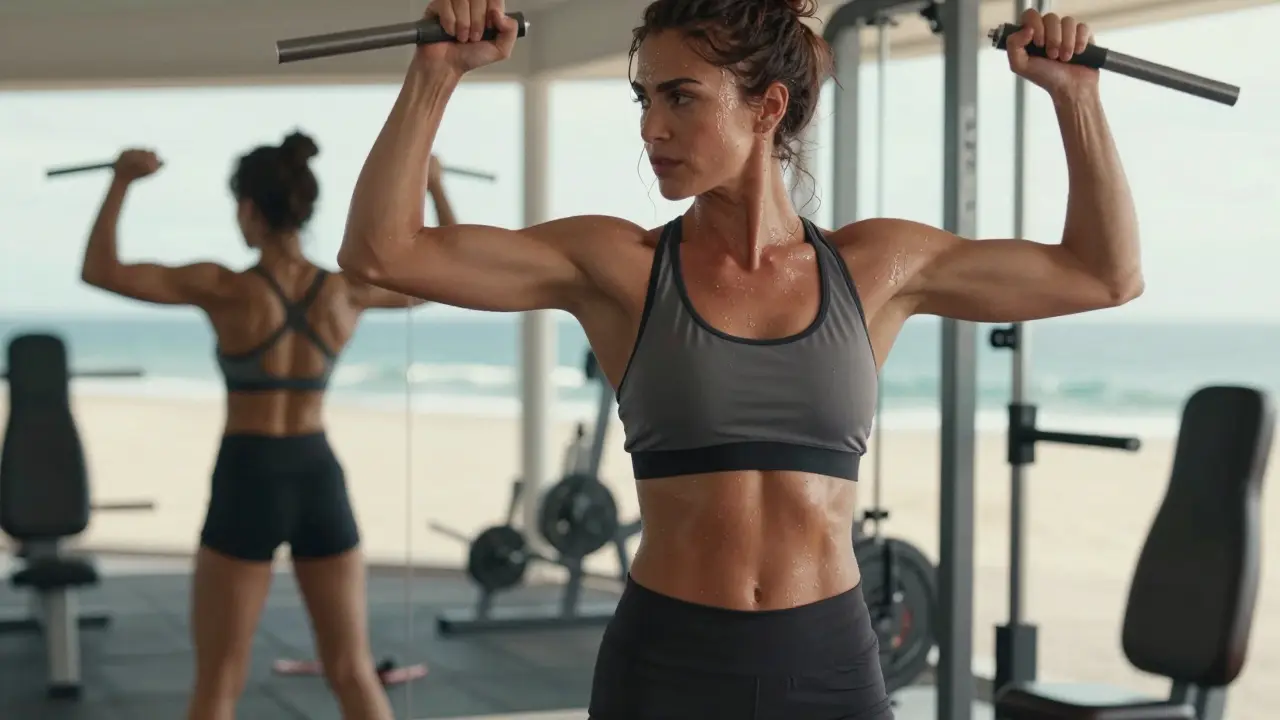
Strength training helps. Not to shrink your body, but to shape it. Squats, planks, and resistance bands build muscle that lifts and defines. That’s what gives that "toned" look people chase. You don’t need to be skinny. You need to be strong.
And hydration? It matters. Dehydrated skin looks dull. Well-hydrated skin glows-even under harsh sunlight. Drink water. Eat veggies. Sleep enough. These are the real secrets behind "bikini-ready" skin.
What BMI ranges do bikini models actually have?
Most professional bikini models fall between a BMI of 17 and 19. But here’s the catch: many of them are underweight. The World Health Organization considers anything under 18.5 to be underweight. That means a large portion of bikini models are medically classified as unhealthy.
Take a 5’6" woman. To have a BMI of 18, she’d need to weigh 110 pounds. To hit a BMI of 17, she’d weigh 105. That’s not a "dream body." That’s a body pushed to the edge.
And it’s not sustainable. Many models report eating disorders, missed periods, and constant fatigue. The industry rewards thinness, not health. And that’s a dangerous message to send.
What’s healthier-and more realistic-for most people
For the average woman, a BMI between 18.5 and 24.9 is the sweet spot. That’s the range where the risk of chronic disease is lowest and energy levels are highest.
Let’s break it down with real examples:
- 5’2" woman: Healthy weight = 105-140 lbs (BMI 18.5-24.9)
- 5’6" woman: Healthy weight = 117-158 lbs
- 5’9" woman: Healthy weight = 128-174 lbs
That’s a wide range. And it’s normal. You don’t have to be at the bottom of that range to look great in a bikini. You just have to be healthy.
Body fat percentage gives a better picture. For women, 21-33% is considered healthy. Athletes might be at 18-22%. The average woman? Around 25-30%. That’s fine. That’s normal. That’s real.
How to feel confident in a bikini-without chasing a number
Confidence doesn’t come from a scale. It comes from feeling strong, capable, and at peace with your body.
Start here:
- Stop comparing yourself to edited photos. Unfollow accounts that make you feel bad.
- Focus on how your body feels-not how it looks. Can you climb stairs without getting winded? Can you hold a plank for 30 seconds? That’s progress.
- Wear what makes you feel powerful. A high-waisted bikini? A one-piece? A rash guard? It doesn’t matter. Wear what lets you move freely and smile.
- Get outside. Sunlight boosts vitamin D and improves mood. A tan glow looks better than any filter.
- Move your body in ways you enjoy. Dance. Swim. Walk. Lift. Don’t do it to burn calories. Do it because it feels good.
The goal isn’t to look like a model. The goal is to feel like yourself-strong, alive, and proud.
Comparison: BMI vs. Body Fat Percentage for Bikini Bodies
| Measure | What It Tells You | Limitations | Real-World Relevance |
|---|---|---|---|
| BMI | Weight relative to height | Can’t tell muscle from fat | Useful for population studies, not individual looks |
| Body Fat % | Percentage of your weight that’s fat | Requires special tools (calipers, bioimpedance) | Best indicator of "toned" appearance |
| Waist-to-Hip Ratio | Measures fat distribution | Hard to measure accurately at home | More linked to health than BMI |
| Visual Appearance | How you look in the mirror or photos | Subjective, affected by lighting and angle | What actually matters when you’re in a bikini |
FAQ: Your Questions About BMI and Bikini Bodies Answered
Is a BMI of 18 good for a bikini body?
A BMI of 18 is at the lower end of the healthy range. For many women, it’s achievable and healthy-if you’re eating well, sleeping enough, and not restricting calories. But if you’re constantly hungry, tired, or skipping periods, then your body is telling you it’s too low. Health always comes before aesthetics.
Do bikini models have eating disorders?
Studies show high rates of disordered eating in the modeling industry. A 2021 survey by the Model Alliance found that 62% of models reported being pressured to lose weight. Many are told they’re "too thick" at a BMI of 20. That’s not about beauty-it’s about industry standards that ignore health. You don’t have to follow those rules.
Can you look good in a bikini at a BMI of 25?
Absolutely. A BMI of 25 is still within the normal range. Many women at this weight have strong, toned bodies. Muscle mass, posture, and confidence matter more than the number on the scale. Look at professional athletes-they often have BMIs over 25 and look incredible in swimwear.
Why do some people look thinner but have higher BMI?
Because they have more muscle. Muscle is denser than fat. A woman who lifts weights regularly might weigh more than someone with the same height and frame who doesn’t exercise-but she’ll look leaner and tighter. BMI can’t tell the difference. That’s why you should never rely on it alone.
What’s the best way to get a bikini-ready body?
Focus on strength training 2-3 times a week, eat enough protein, stay hydrated, and sleep 7-8 hours. Don’t starve yourself. Don’t do endless cardio. Build muscle. Burn fat naturally. And wear your bikini because you feel good-not because you think you have to.
Final thought: Your body isn’t a photo
The bikini isn’t the goal. The feeling of freedom, of sun on your skin, of laughing with friends, of dancing without worrying-is the goal. No one remembers your BMI. They remember how you made them feel.
So wear the suit you love. Stand tall. Smile. And stop letting a number define your worth.